

Alzheimer’s & Dementia Care in Roseville
Care That Reduces Stress and Uncertainty
We match your loved one with steady, experienced Caregivers who understand the patience, routines, and reassurance memory care requires.

Helping Your Loved One Feel Safe, Seen, and Cared For Every Step of the Way
Memory care is not only about safety. It is about helping each day feel more predictable, less overwhelming, and more connected for someone living with Alzheimer’s or another form of dementia.
The right support can help your loved one move through daily routines with greater comfort and less confusion. That may include:
Steady routines that reduce anxiety and uncertainty
Gentle redirection and calm communication during difficult moments
Support with dressing, bathing, meals, mobility, and other daily needs
Familiar activities that bring comfort, like music, conversation, or quiet companionship
Consistent caregivers who build trust through patience and repetition
We meet your loved one where they are, providing patient, attentive home care that supports their dignity, daily comfort, and your peace of mind.

“She Doesn’t Just Care for Him, She Understands Him.”
– Families Finding Peace of Mind Through Amevian

How We Help Your Loved One Stay Safe and Connected at Home
We tailor care to your loved one’s needs, preferences, stage of memory loss, and daily habits so support feels natural rather than overwhelming.
Our Alzheimer’s and dementia care can include:
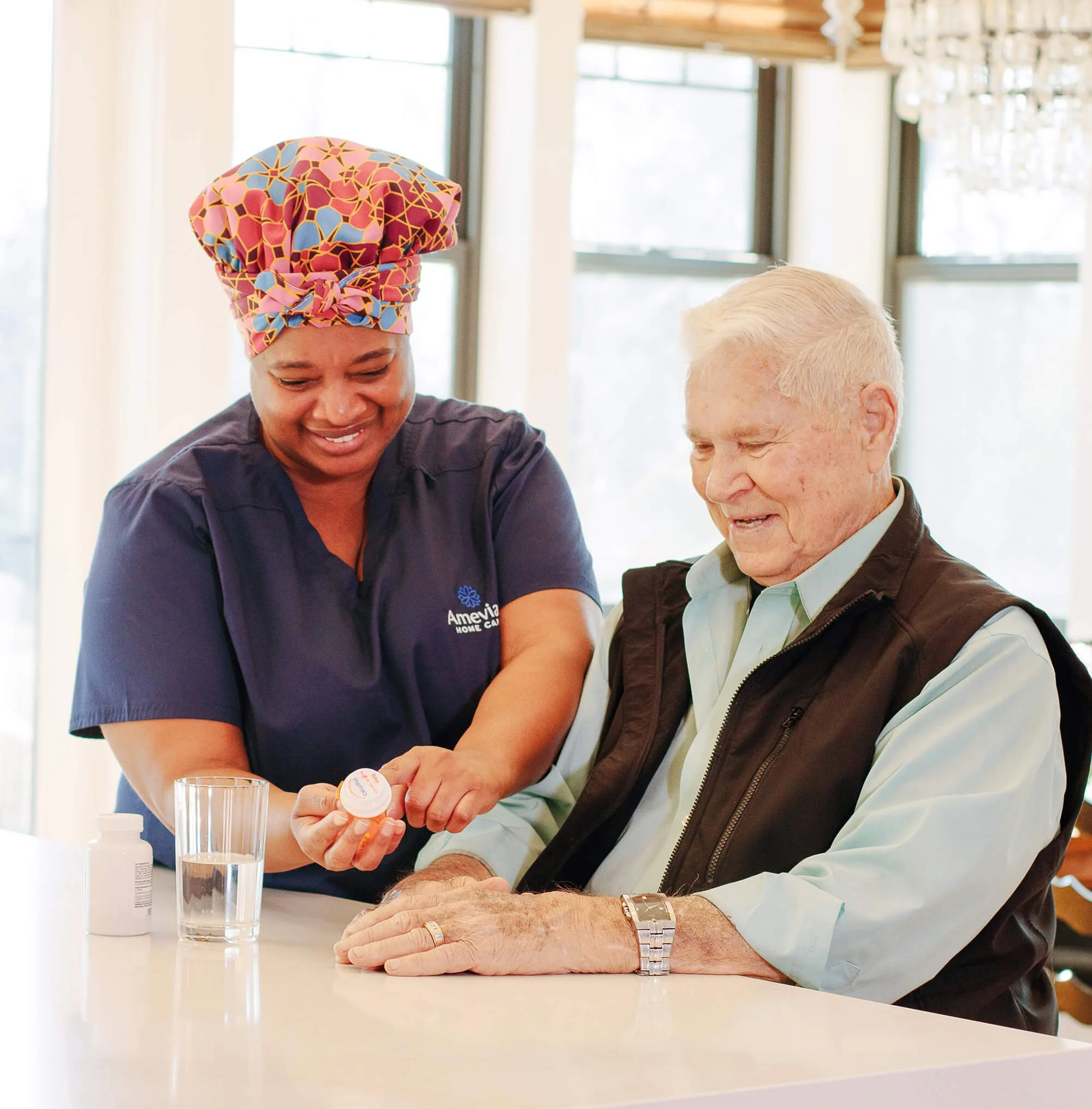
Medication reminders and support with daily routines
Bathing, dressing, grooming, and personal hygiene assistance
Companionship that encourages engagement and familiarity
Supervision to help reduce wandering, fall risk, and unsafe moments at home
Calm support during confusion, agitation, or sundowning
As needs change, care can change too. We adjust each Care Plan over time so your loved one continues to receive the right level of support, whether that means more hands-on help, more supervision, or more structure throughout the day.

What Happens When Your Family Reaches Out
Getting help for memory loss can feel overwhelming, especially when safety, resistance to care, or sudden changes are already creating stress. Our process is designed to help you understand your options without pressure.
Start with a short consultation call: In about 5 to 10 minutes, we learn what has changed, what your loved one needs help with, and whether in-home support may be the right fit.
Talk through the details in an assessment: Our Care Manager take a closer look at routines, personal care needs, safety concerns, triggers, Family preferences, and opportunities for comfort, connection, and life enrichment.
Build a care plan around the whole person: Support is shaped around both essentials and meaningful daily moments, so care is not limited to tasks like bathing, dressing, meals, or supervision.
Prepare for the first day of care: Once the schedule and paperwork are in place, we help match your loved one with an experienced Caregiver and make the start of service feel as smooth as possible.
Adjust as needs change: Families have access to local support when questions come up, and care can be updated as symptoms, routines, or Family needs shift.
Care Options That Can Change With Your Family’s Needs
The right level of support may look different from one Family to the next. Some loved ones need a few hours of help with routines and companionship, while others need more consistent supervision as memory loss progresses.

Personalized Care Plans
Care tailored to your loved one’s routines, preferences, safety concerns, and stage of memory loss.

Memory-Care Specific Techniques
Caregivers use calm communication, redirection, and routine-based support to ease confusion and help each day feel more familiar.

24-Hour, Live In & Overnight Support As Needed
24-hour, live-in, or overnight care is available when Families need added support during evenings, nights, or more difficult stretches.

Why Families Trust Us With Memory Care at Home
Dementia support is personal. It takes patience, consistency, communication, and a Caregiver who can help your loved one feel respected through every stage of memory loss. Families choose us because we provide:
Dementia-trained Caregivers who understand redirection, routine-based support, and calm communication
Thoughtful Caregiver matching based on your loved one’s routines, personality, care needs, and comfort level with new people
Carefully screened Caregivers selected for patience, reliability, and experience supporting older adults at home
Flexible scheduling, from a few hours of help to more consistent care as needs change
Local, Family-owned support with a South Placer area team that understands how quickly care needs can shift after a hospital visit, a new diagnosis, or a difficult week at home
A local point of contact when routines, schedules, or support needs need to be adjusted
Proudly Serving Roseville and the Surrounding Area
We support Roseville Families with care that fits the rhythms of home, from quieter daily routines to added help after a health change or hospital stay.
- Auburn
- Carmichael
- Citrus Heights
- Davis
- East Sacramento
- El Dorado Hills
- Elk Grove
- Fair Oaks
- Folsom
- Granite Bay
- Lincoln
- Rancho Cordova
- Rocklin
- Sacramento
- West Sacramento



When Home Still Feels Right, But Doing It Alone Feels Hard
You do not have to figure out the next step on your own. Talk with a local care advisor about what has changed, what feels hardest right now, and what kind of support would make daily life safer, calmer, and more manageable for your Family.

-
It may be time when forgetfulness starts affecting safety, hygiene, meals, medication routines, sleep, or a Family Caregiver’s ability to keep up. A consultation can help you decide whether a few hours of support or more consistent care makes sense.
-
Yes. Caregivers can provide supervision, familiar routines, redirection, and fall-risk awareness to help reduce unsafe situations. The goal is to support safety without making your loved one feel controlled or rushed.
-
Ask about memory-care experience, Caregiver consistency, scheduling flexibility, communication with Family, and how the care plan changes as needs progress. The right fit should feel calm, practical, and personal.
-
Yes. Evening confusion or agitation can often be eased with calmer routines, gentle redirection, reduced stimulation, and steady reassurance. Overnight or evening care may help when those hours become harder for the Family to manage.
-
Medicare usually does not cover ongoing non-medical home care, such as companionship, bathing, dressing, or supervision. Long-term care insurance, Medi-Cal waiver programs, or other benefits may help, depending on eligibility.
Questions Families Ask When Memory Care Starts to Feel Urgent
Click any question below to view the answer.